MoreLogin Alternative: Android Cloud Phones or Physical iPhones?
MoreLogin offers Android cloud phones and an antidetect browser. Compare alternatives by workflow, operating system and the need for physical iPhones.
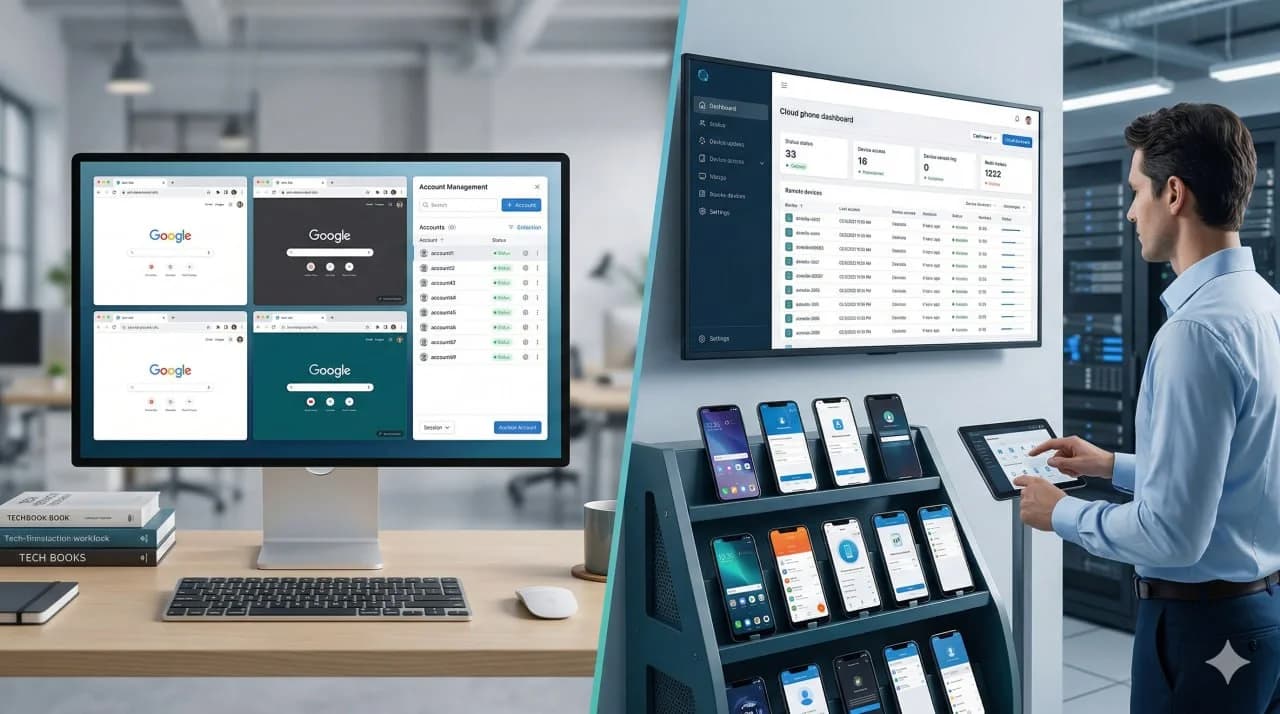
Short answer: MoreLogin is not just an antidetect browser. It also offers Android cloud phones, so native mobile work is not, by itself, a reason to leave the vendor. Consider an alternative when you need a different operating environment, physical iOS devices, or workflow capabilities that its specific product does not satisfy.
Content review: 7 September 2026. MoreLogin's official website presents Cloud Phone & Antidetect Browser products and describes Cloud Android Devices, a Full Android System and isolated browser environments. These statements confirm Android mobile and browser offerings; they do not establish iOS support or the underlying hardware architecture. This article does not report hands-on tests.
Separate MoreLogin's two product categories
MoreLogin's browser product addresses browser profiles and separate web sessions. Its cloud-phone offering provides an Android environment for mobile work. A browser profile does not itself become a phone, but that limitation should not be attributed to MoreLogin's entire portfolio.
The Cloud Phone vs Antidetect Browser comparison explains the distinction between these operating layers. Start by identifying whether your operators need web dashboards, Android apps or iOS apps, then compare the products that serve that requirement.
MoreLogin and iRemotech compared by product
| Dimension | MoreLogin browser | MoreLogin Android cloud phones | iRemotech remote iPhones |
|---|---|---|---|
| Environment | Isolated browser environments | Android cloud-phone environment | Physical iPhones running iOS |
| Relevant workload | Web sessions and profile management | Android-native app operations | iOS-native app operations |
| Native mobile apps | Not supplied by browser profiles alone | Android; verify specific app support | iOS; verify specific app support |
| Physical iPhone requirement | Not the browser product's purpose | Not established by the cited Android offering | Core service model |
| State and assignment | Confirm profile persistence and access | Confirm phone persistence and allocation | Confirm device persistence and allocation |
| Team workflow | Verify permissions and handoff | Verify permissions and handoff | Verify permissions and handoff |
| Purchase checks | Profiles, seats and integrations | Apps, Android version, capacity and limits | Apps, iOS version, device access and limits |
The official product descriptions are not enough to classify MoreLogin's cloud phones as physical hardware, emulators or virtual machines. Obtain technical documentation if that distinction matters to your application.
When staying with MoreLogin makes sense
Stay with its browser product when the actual work is web-based and its profile-management features meet your needs. If the work moves into Android apps, evaluate MoreLogin's cloud phones rather than assuming the vendor cannot support native execution.
For TikTok, Instagram, WhatsApp Business or another mobile workflow, confirm the exact app and required functions. Basic installation is not proof that media upload, verification, recovery or every app feature works in a particular remote environment. Run an authorized pilot before committing a wider operation.
When to consider an alternative
iRemotech is a relevant alternative when your requirement is remote access to physical iPhones running iOS. That may matter for iOS-specific app behavior or work that must take place on actual Apple hardware. It does not establish superior account safety, faster execution or longer account lifespan.
An alternative can also make sense if a required permission model, support arrangement or operational feature is missing. Verify that gap and the replacement's capability rather than switching on the assumption that all cloud phones work alike. Best Cloud Phones for Social Media in 2026 provides broader category context for building a shortlist.
Check the operational details
Ask each provider about app availability, OS versions, session persistence, device assignment, operator permissions, data handling and recovery support. Treat camera, gallery, SIM, SMS and network requirements as separate checks; do not assume every service includes them.
Compare current plans for equivalent capacity and usage, including seats, connectivity and optional services. Record pilot results for your own workflow rather than relying on untested performance claims. If you migrate, document account ownership, recovery access and handoff responsibilities before expanding.
Verdict
MoreLogin can serve both browser and Android mobile workflows. iRemotech is worth evaluating when physical iPhones and iOS are the requirement. Choose by verified product fit, not a browser-only description of the vendor. Review current features and prices before purchase, and remember that no infrastructure choice guarantees compliance, protection from bans or successful account recovery.
Stop juggling physical devices.
iRemotech gives you real iPhones in the cloud — ready for multi-account operations, automation, and scale. Create your account in minutes.
Sign up freeMiguel Nogales
Founder @ iRemotech
From Spain, living in Andorra. Tech enthusiast passionate about infrastructure, remote technology, and building innovative solutions.