
Real Devices vs Emulators: Why Real iPhones Are the Only Infrastructure That Scales
Real devices vs emulators is an architecture decision, not just a cost decision. This guide explains where emulators fit, where they fail, and when real iPhones become the better infrastructure.
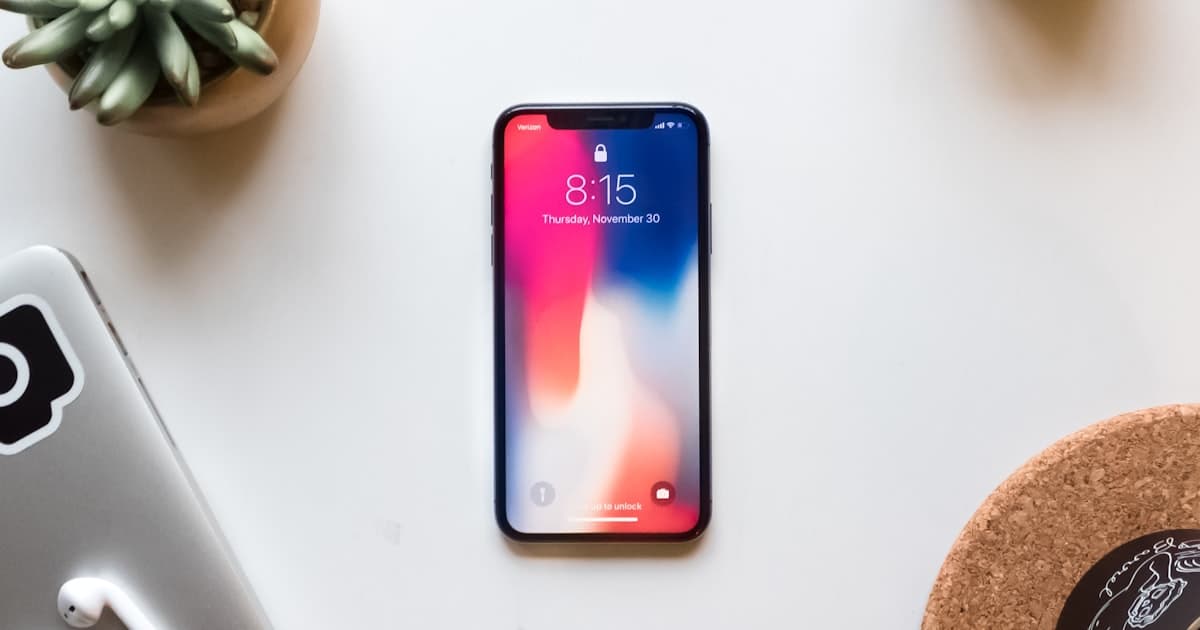
Emulators are usually the default choice for teams trying to scale mobile operations. They are cheap, easy to provision, and heavily documented. That makes them look like the rational infrastructure choice.
For the operating model around device fleets, keep the phone farm guide nearby.
For the underlying category, use the cloud phone guide as the baseline.
Short answer
Emulators are useful for testing, disposable workflows, and early experimentation. Real devices are better when the operation depends on stable identity, genuine hardware signals, and long-term account health. The deeper the operation depends on mobile trust, the less viable emulation becomes.
The core difference is simple: an emulator has to simulate what a real device generates naturally.
Key takeaway
This is not mainly a price comparison. It is an architecture comparison. Emulators can work when realism is not critical. Real devices win when the environment checks whether the device, network, sensors, and behavior actually look like a real phone in continuous use.
This guide explains the structural difference between emulators and real devices, why emulator-heavy setups look cheaper than they really are, where emulators still make sense, and when real iPhones become the better architecture.
Decision snapshot: when real devices beat emulators
Use an emulator when the question is “does this app or flow basically work?”. Use a real device when the question is “will this account, session and environment remain trusted over time?”.
- Best fit for emulators: QA, regression testing, disposable app checks and low-stakes automation.
- Best fit for Android cloud environments: Android workflows where virtualized device signals are acceptable.
- Best fit for real iPhones: iOS-heavy audiences, social accounts, messaging workflows, camera/app behavior, long sessions, recovery-sensitive operations and cases where platform systems evaluate hardware consistency.
Not a fit: real devices add cost and operational constraints. They are unnecessary when the workload does not need account durability or native-device trust.
iRemotech fits the real-device side of the decision: physical iPhones operated remotely, with the device layer treated as infrastructure rather than a simulated profile. If the buyer is still comparing Android virtualization against physical iOS, the next practical check is Android cloud phone vs real iPhone.
Emulator vs real device
| Factor | Emulator | Real device |
|---|---|---|
| Hardware identity | Simulated | Genuine |
| Sensor data | Synthetic or incomplete | Real |
| Network coherence | Often reconstructed | Native to the device setup |
| Session realism | Lower | Higher |
| Upfront device cost | Low | Higher |
| Long-term trust | Weaker | Stronger |
| Best fit | Testing, low-stakes workflows | Production mobile operations |
What a real device has that an emulator must simulate
A real device does not have to pretend to be a phone. It simply is one.
That changes everything.
A real device generates:
- real hardware identifiers
- real sensor behavior
- real battery state changes
- real screen and touch characteristics
- real operating system behavior under normal device conditions
- real interactions with SIM, carrier, and local device state
An emulator, by definition, must approximate many of these layers.
Sometimes the approximation is good enough. Sometimes it is not. The important point is that emulators are not failing because operators forgot one tweak. They are limited because simulation and physical reality are not the same thing.
Why emulator setups look cheap but break at scale
On paper, emulators look efficient:
- low per-device cost
- instant provisioning
- fast horizontal scaling
- mature tooling for automation
That is why so many teams start there.
The problem shows up later. The cost of emulation is not just the monthly server bill. It is the fragility that appears when the workflow depends on sustained trust and consistency.
Common scaling problems include:
- signal patterns that are too uniform
- weaker session durability
- more maintenance around environment drift
- more breakage after platform or UI changes
- more hidden operational work to keep the environment believable enough
Cheap infrastructure becomes expensive when the operation spends too much time compensating for what the environment cannot naturally provide.
Why real devices scale better structurally
Real devices remove a category of problems instead of trying to patch around them.
You do not need to fight the device into looking real. You start from real hardware and build the operating model around it.
That creates structural advantages:
- stronger identity coherence
- fewer simulation artifacts
- better alignment between device state and actual behavior
- more reliable long-running sessions
- better fit for mobile-native workflows
This is why real devices matter most when the operation is not just technical, but commercial. If accounts, sessions, or device trust have business value, architecture quality matters more than cheap provisioning.
Where emulators still make sense
Emulators are not useless. They are simply overused outside their natural fit.
They make sense for:
- internal testing and QA
- disposable automation workflows
- early prototyping
- app validation across many configurations
- low-trust environments where failure is acceptable
If the workflow is tolerant of resets, bans, friction, or churn, the emulator tradeoff may still be rational.
The mistake is assuming that a tool that works for testing will also be the right foundation for production-scale mobile operations.
Where real iPhones become the better architecture
Real iPhones make more sense when:
- the operation needs iOS specifically
- account health matters over time
- the workflow depends on mobile-native trust
- session stability matters
- you want fewer artificial inconsistencies in the device environment
- the cost of failure is higher than the cost of better infrastructure
This is also why the real comparison is not just emulator vs device. It is often emulator-heavy setups vs managed real-device infrastructure.
The build-vs-buy problem most teams underestimate
Many teams eventually conclude that real devices are better but then run into a second problem: operating them at scale.
A real-device setup creates its own burden:
- hardware acquisition
- SIM provisioning
- network design
- control software
- screen access
- automation orchestration
- recovery workflows
- updates and maintenance
That is why the real strategic decision is often:
- use emulators and accept structural weakness
- build your own real-device infrastructure and accept operational complexity
- use managed remote real-device infrastructure and offload the operating burden
Detection is not the only issue
People often reduce this discussion to detection alone. That is too narrow.
Even before explicit restrictions show up, weaker infrastructure can create:
- more friction
- less stable sessions
- more recovery work
- more manual intervention
- worse operating use
So the question is not just whether an emulator gets flagged. The question is whether the system remains usable, maintainable, and trustworthy as the operation grows.
Final answer
Emulators and real devices solve different problems.
Emulators are good when the job is speed, low cost, and acceptable fragility.
Real devices are better when the job is credibility, stability, and long-term production use.
The more your operation depends on genuine mobile behavior, the more real devices stop being a premium option and start becoming the correct architecture.
What to compare once emulators stop being viable
FAQ
Are emulators always bad?
No. Emulators are useful for testing, QA, disposable workflows, and early experimentation. They become a weaker fit when the operation depends on stable mobile identity and long-lived account trust.
Why do real devices scale better for sensitive mobile operations?
Real devices scale better because they start from genuine hardware, sensor behavior, operating system state, and carrier interactions instead of trying to simulate those layers convincingly.
Is this mainly about detection?
Not only. The difference also affects session durability, maintenance burden, recovery work, and the amount of manual effort needed to keep the environment usable over time.
Miguel Nogales
Founder @ iRemotech
From Spain, living in Andorra. Tech enthusiast passionate about infrastructure, remote technology, and building innovative solutions.