What Is a Cloud Phone? The Complete Guide (2026)
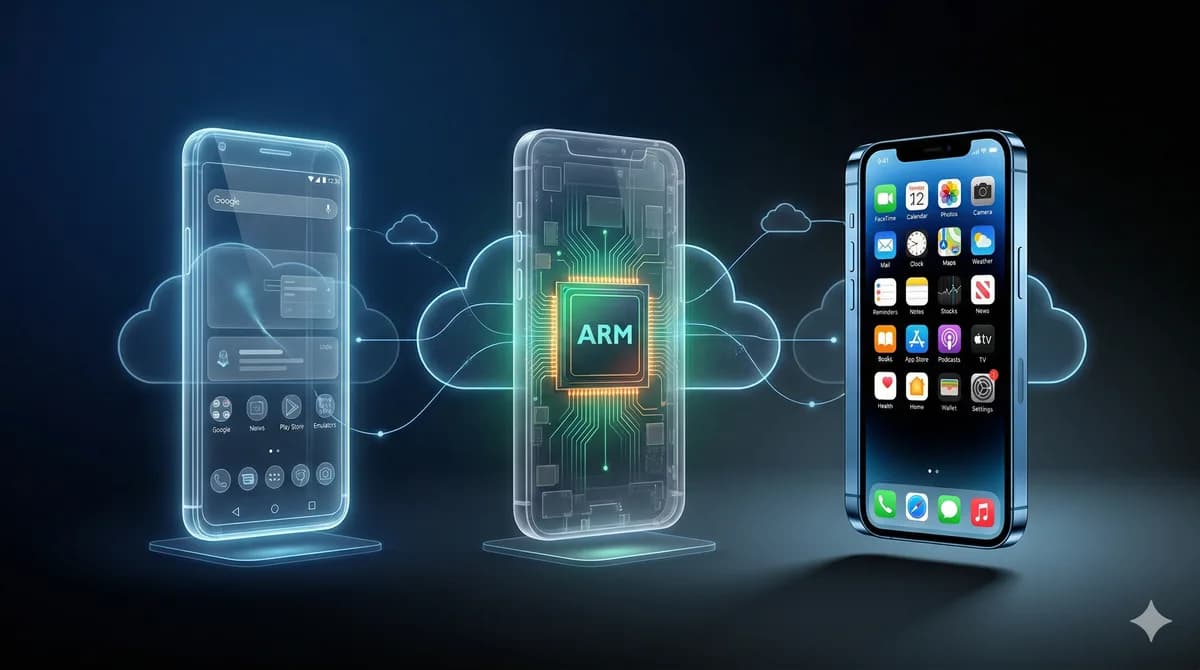
Cloud phones are not one thing. This guide explains the three real cloud phone architectures — emulators, ARM virtual devices, and physical devices — and when each one makes sense.
Blog
Practical guides, comparisons, and technical breakdowns about phone farming, cloud phones, real-device infrastructure, and multi-account mobile operations. Built for teams that need to understand how mobile environments actually work at scale.
Cloud phones are not one thing. This guide explains the three real cloud phone architectures — emulators, ARM virtual devices, and physical devices — and when each one makes sense.
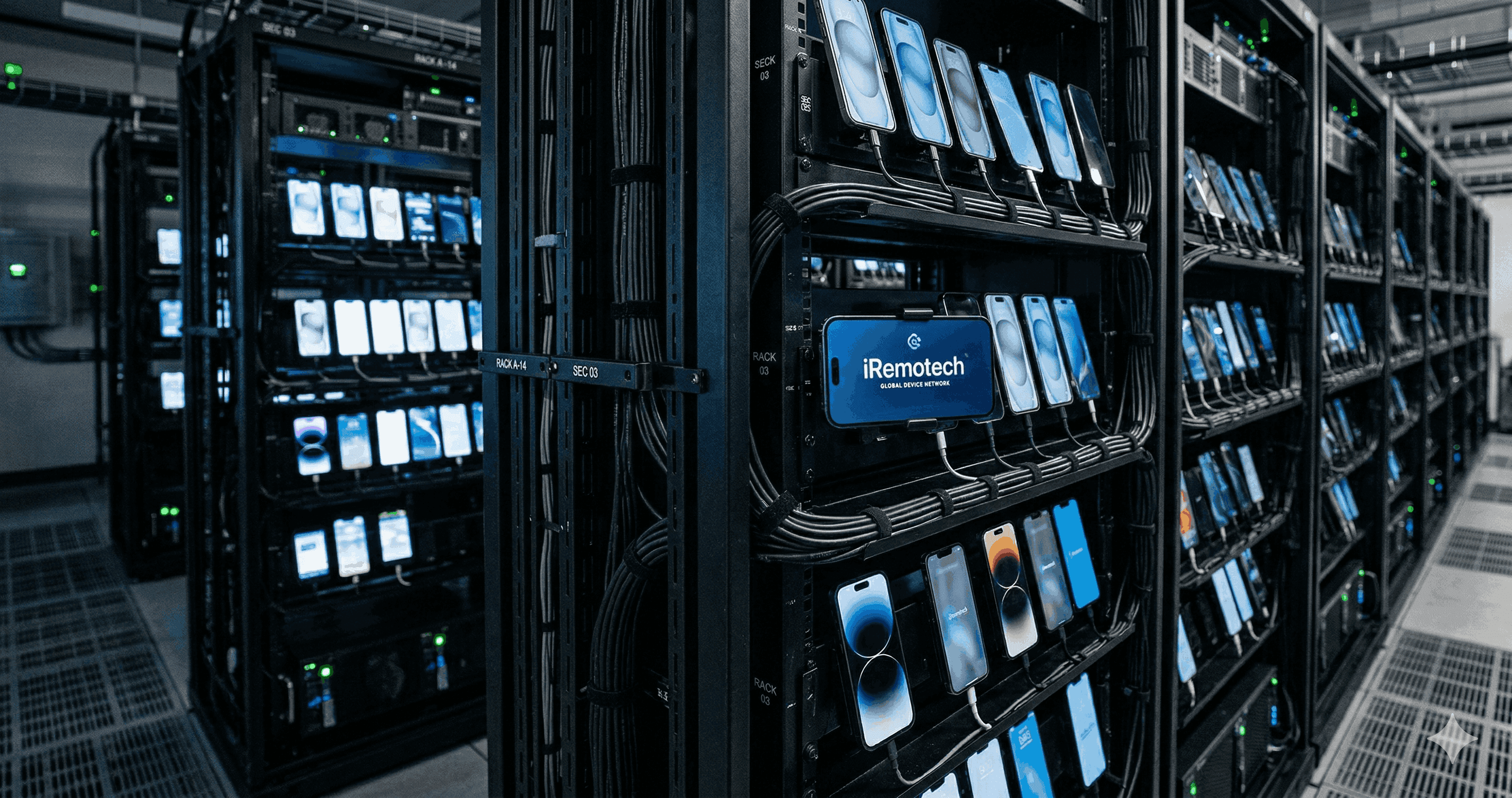
A phone farm is more than a shelf of phones. This guide explains the main phone farm models, what actually breaks at scale, and when managed remote infrastructure becomes the better fit.
Real devices vs emulators is an architecture decision, not just a cost decision. This guide explains where emulators fit, where they fail, and when real iPhones become the better infrastructure.
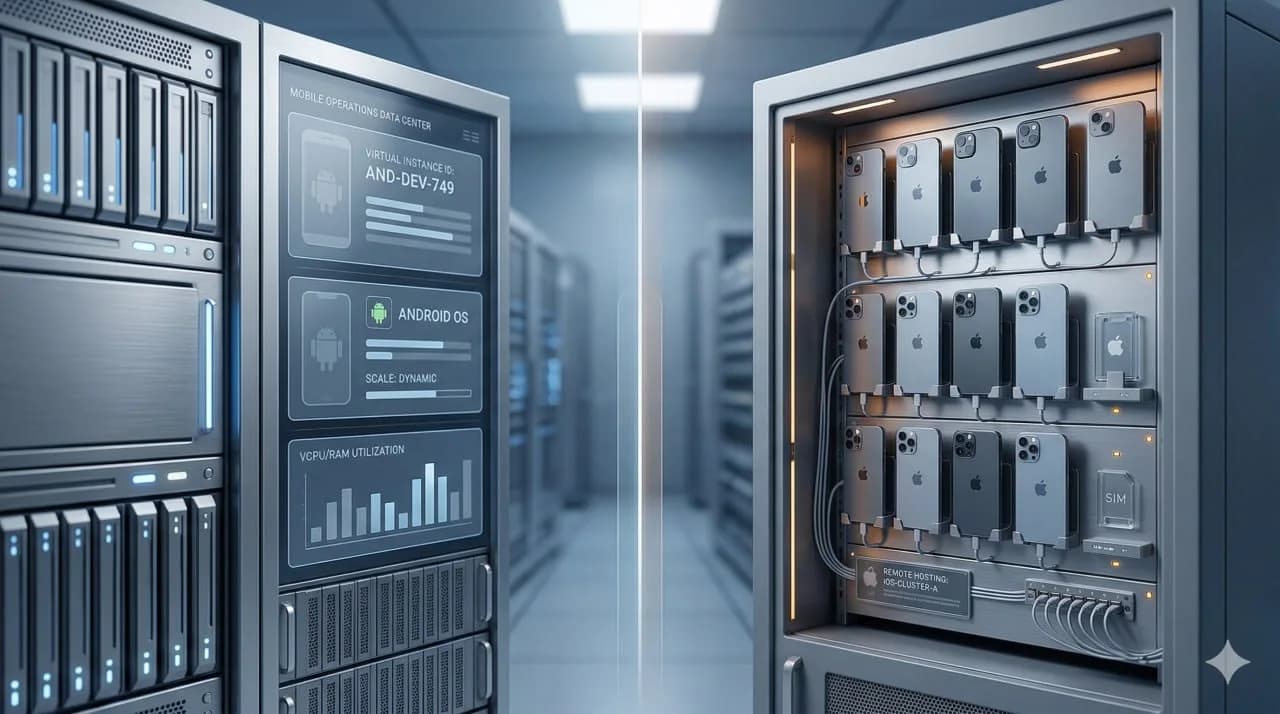
Compare Android cloud phones vs real iPhones by architecture, device behavior, SIM identity, and operational fit for professional mobile workflows.

Compare phone farm vs cloud phone costs, including CapEx, OpEx, staffing, maintenance, recovery, and the real total cost of ownership.
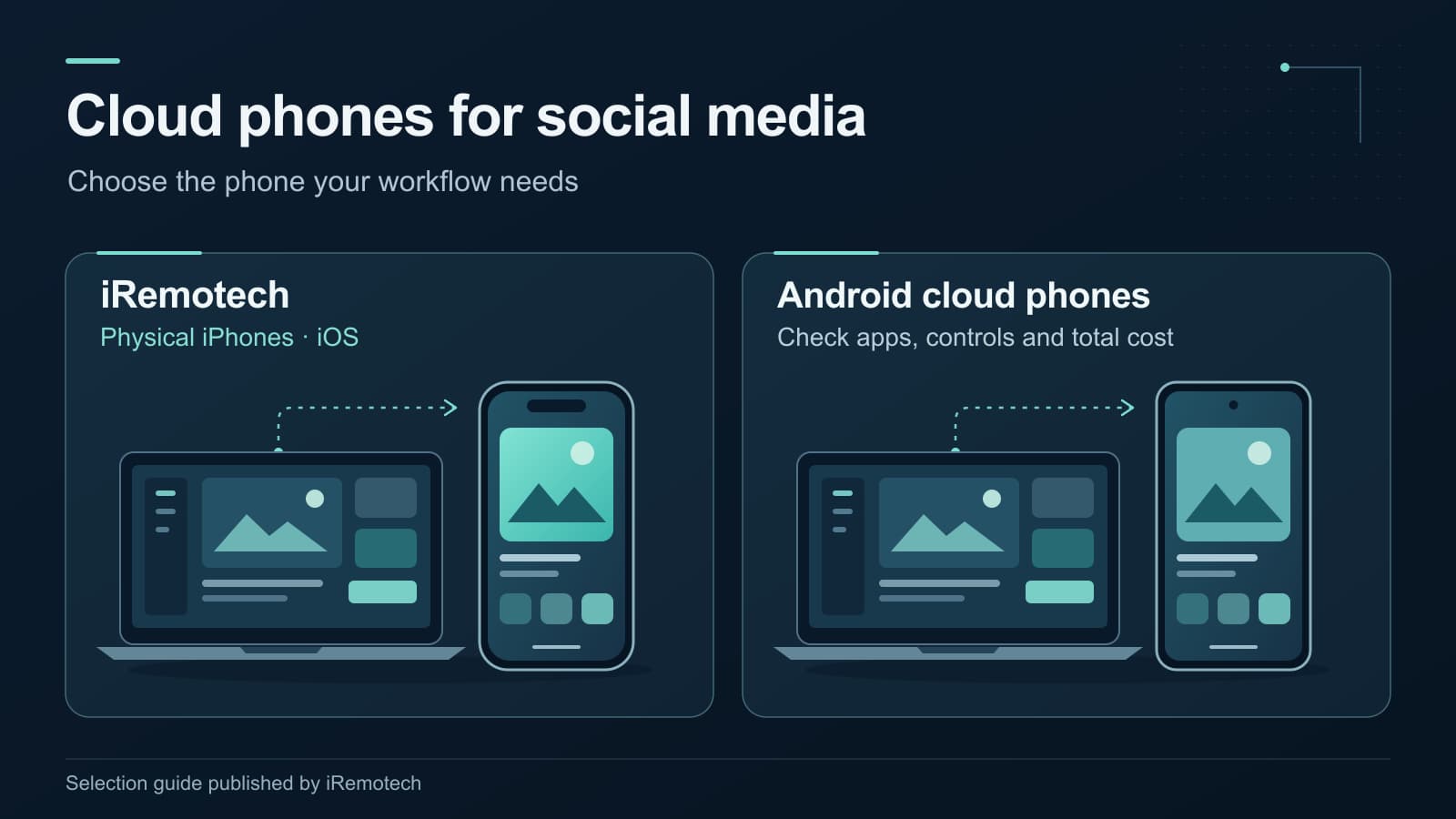
Compare iRemotech, GeeLark, Redfinger and VMOS Cloud by operating system, team controls and cost structure. Start with real iPhones or Android, rather than a generic ranking.
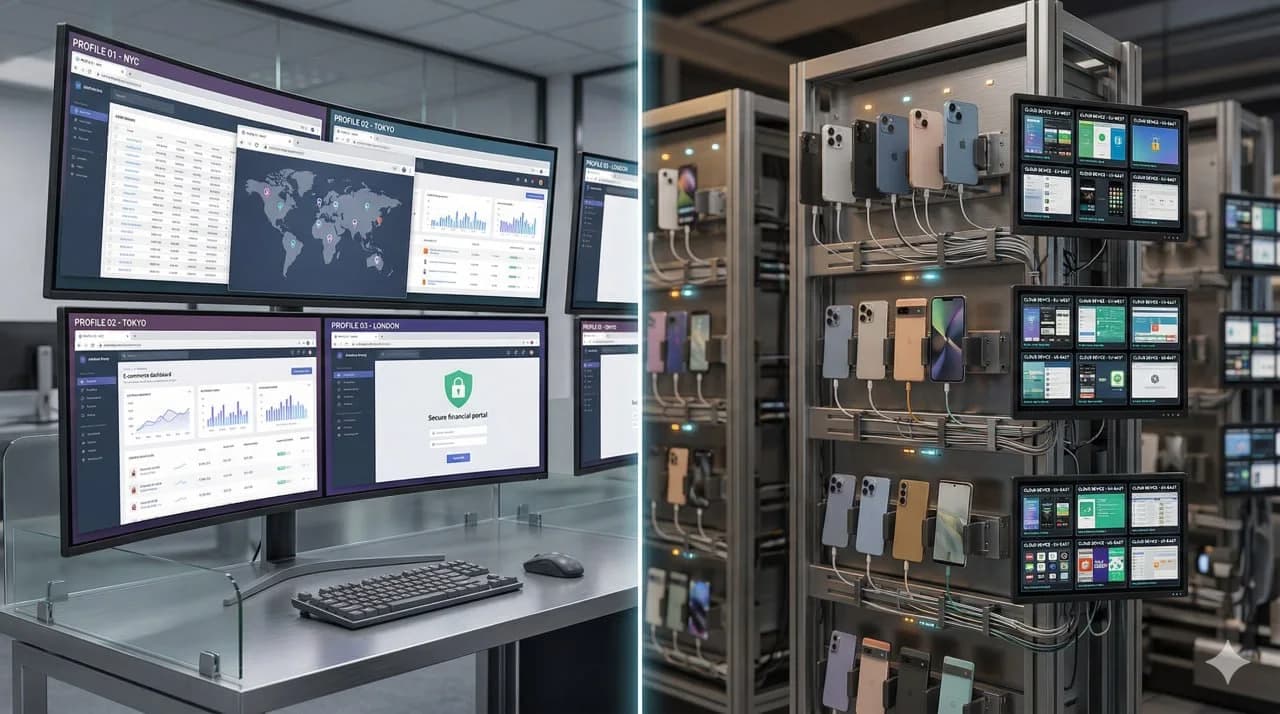
Compare cloud phones vs antidetect browsers by operating layer, app support, trust model, and use case. Learn which category actually fits your workflow.

The best antidetect tool for social media depends on the operating surface. This guide compares antidetect browsers, cloud phones, and real devices for TikTok, Instagram, and WhatsApp workflows.
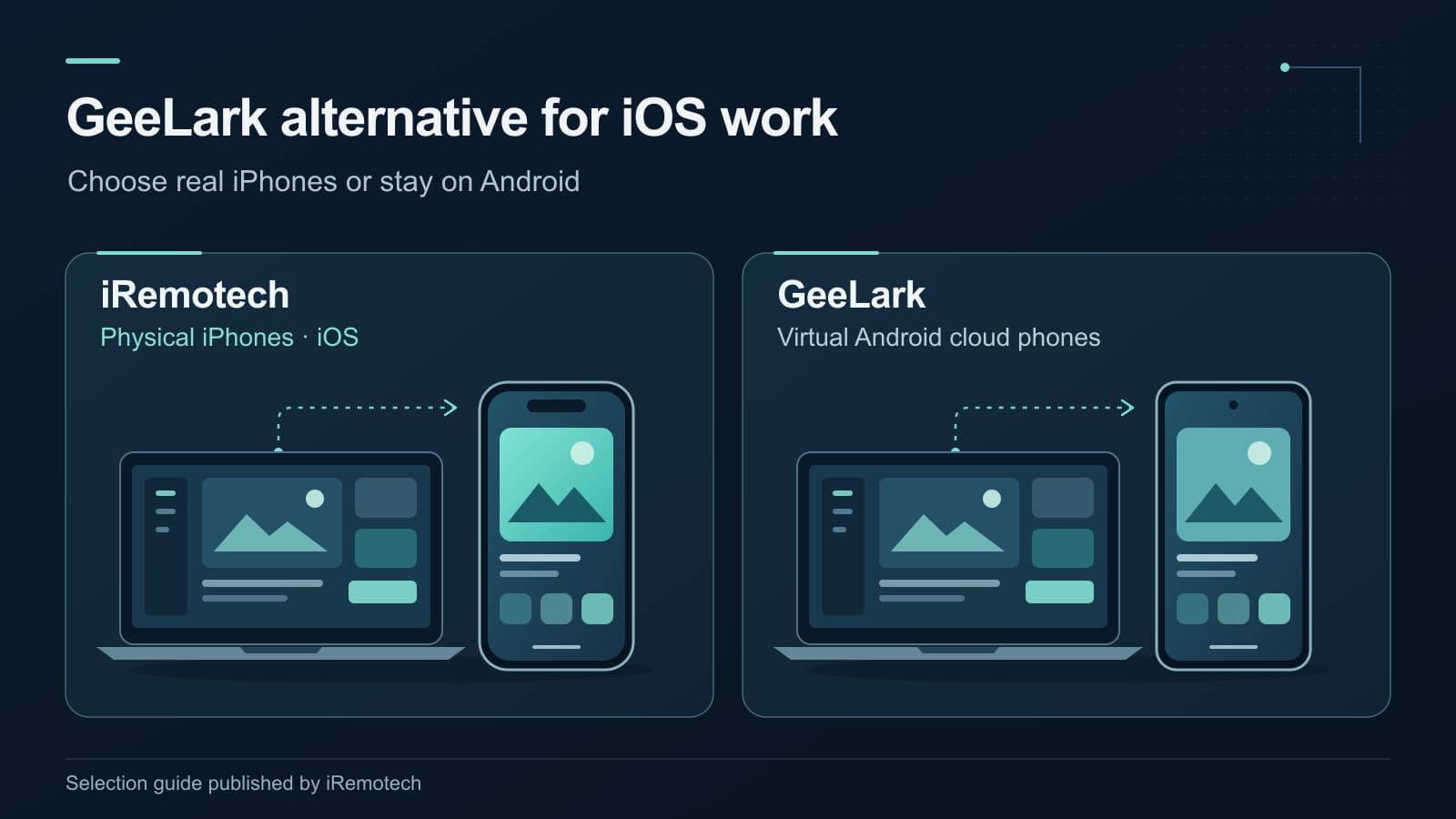
A GeeLark alternative depends on the phone you need. Keep GeeLark for Android cloud phones; choose iRemotech when the work requires real iPhones running iOS.
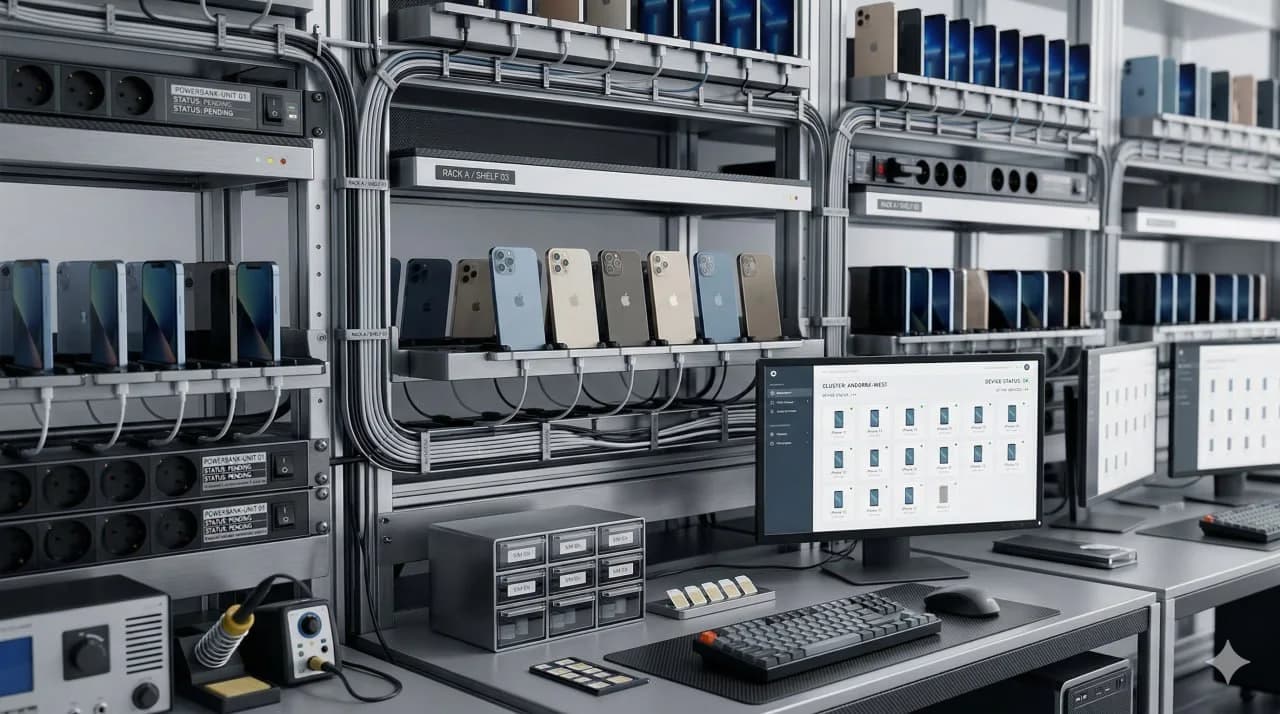
Learn how to build an iPhone farm with the right hardware, control software, SIM strategy, network design, and operations discipline.

Mobile platforms do not rely on one signal. They score a device using a stack of checks: hardware identity, OS consistency, carrier data, network quality, sensors, app behavior, and cross-account correlation. The more sy
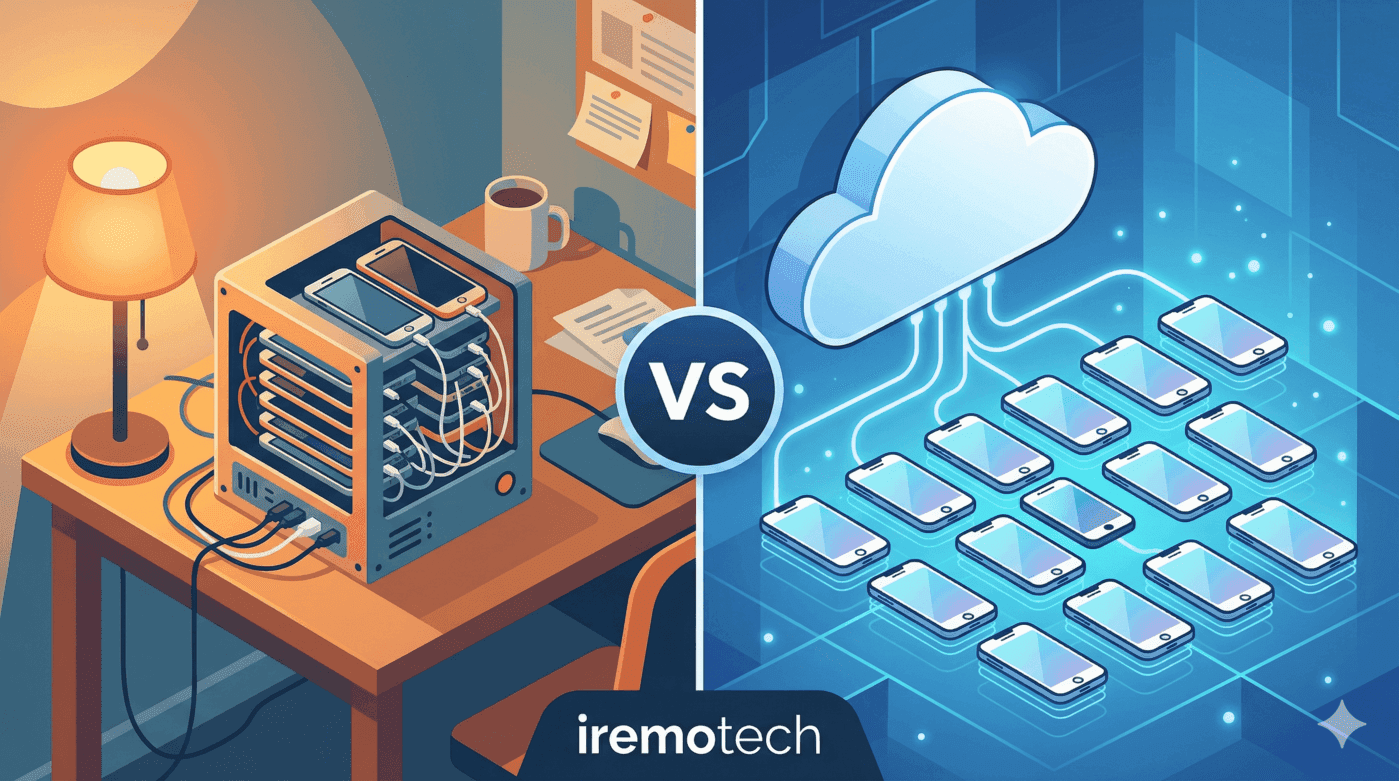
Compare box phone farms vs remote iPhone farms. Learn where local hardware setups work, where they hit their ceiling, and when managed remote infrastructure makes more sense.
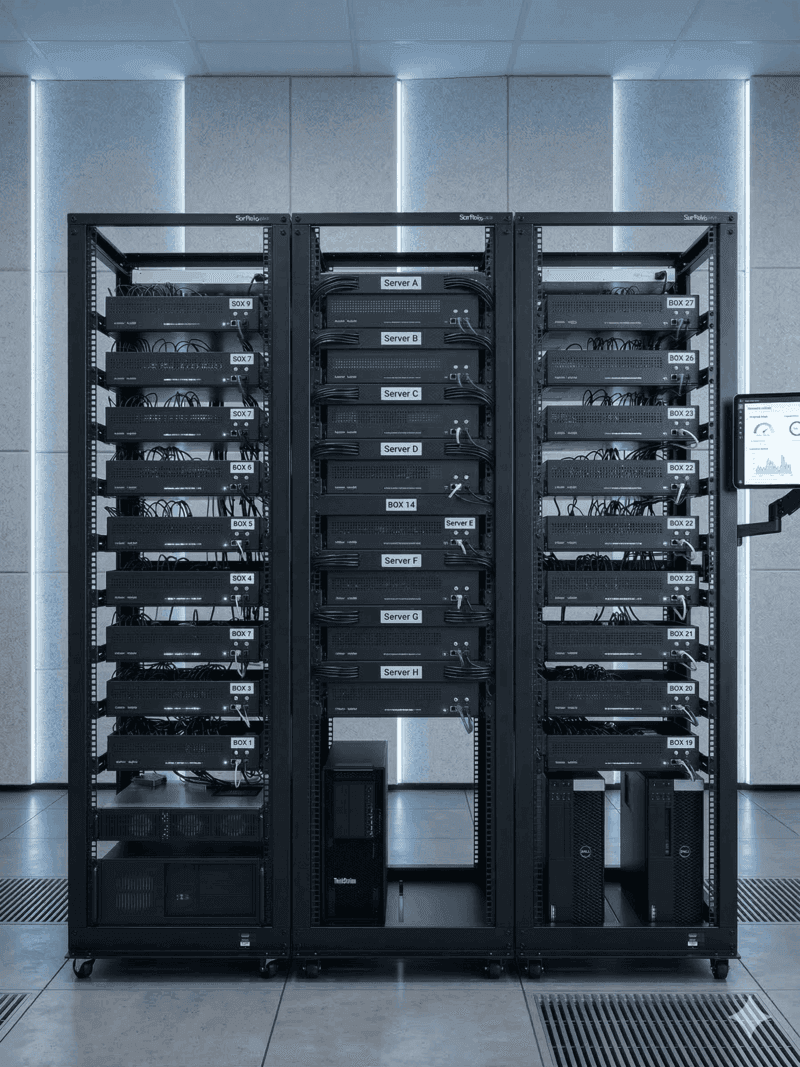
Looking for an iMouse alternative? This guide explains why operators move away from fragile local iPhone control and what a better remote model looks like.